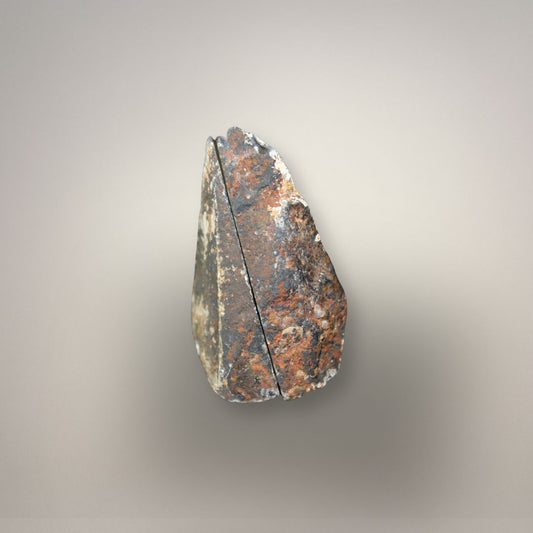
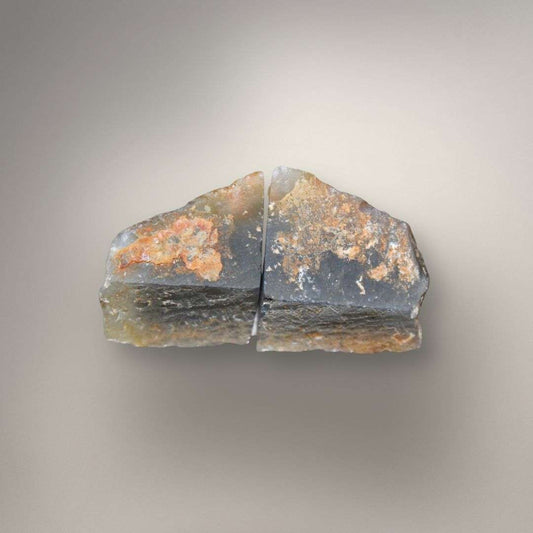
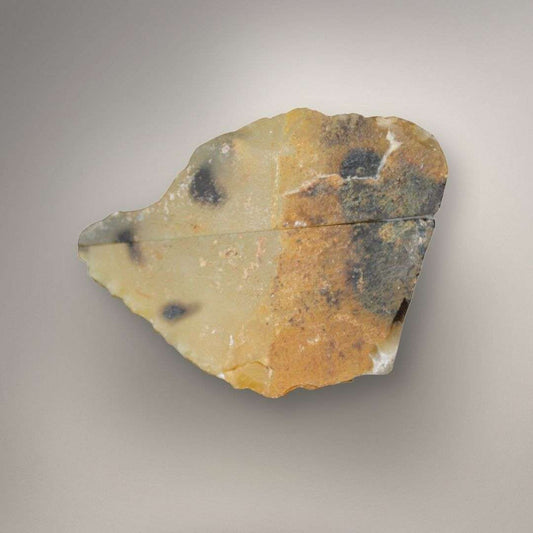
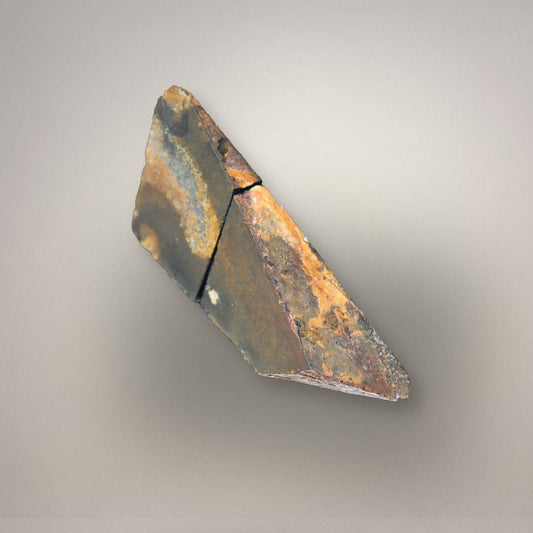
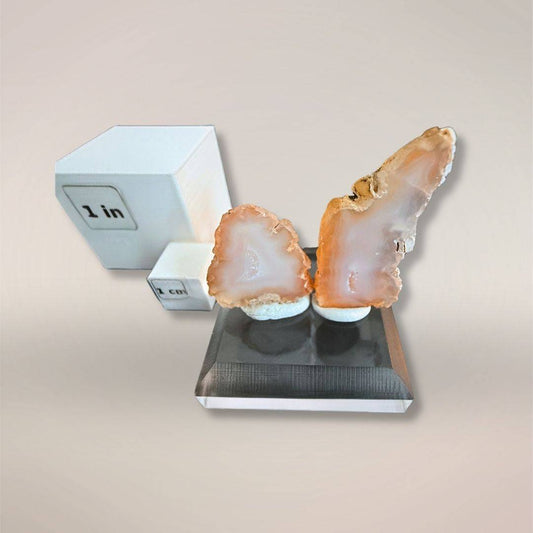
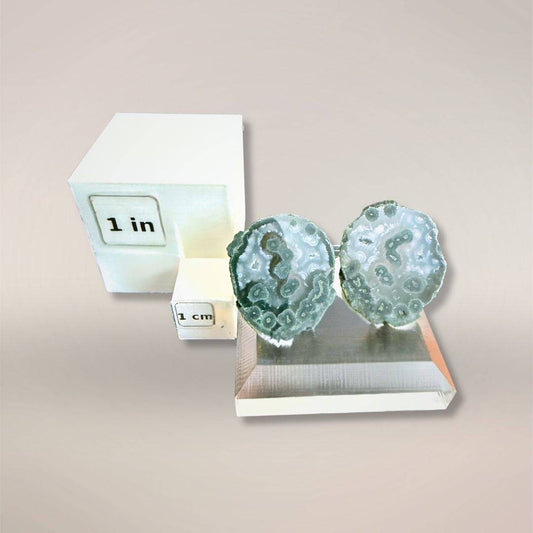
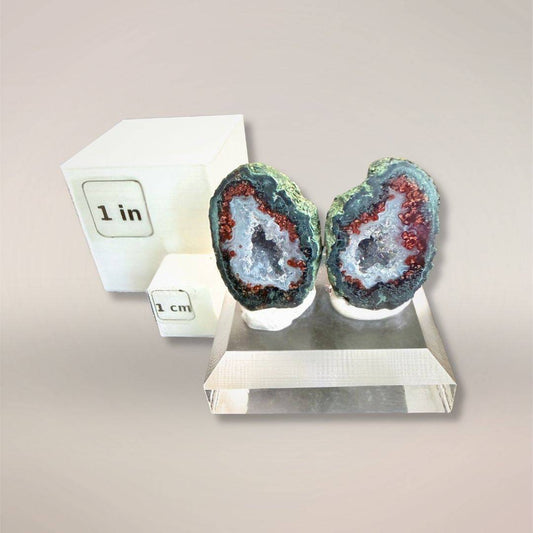
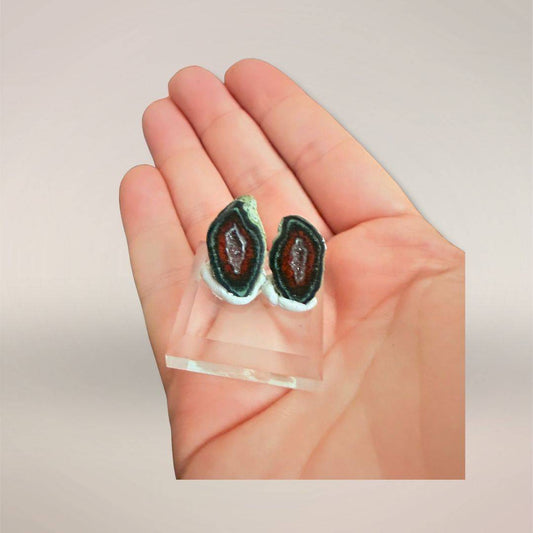
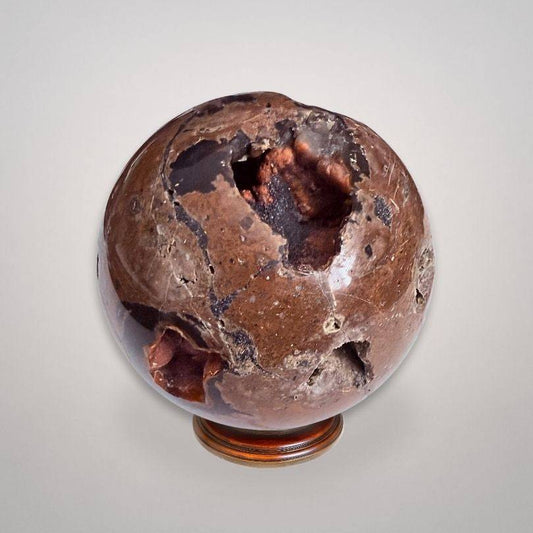
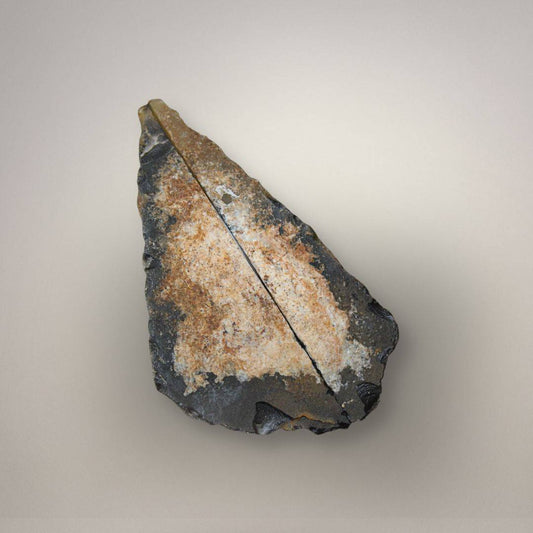
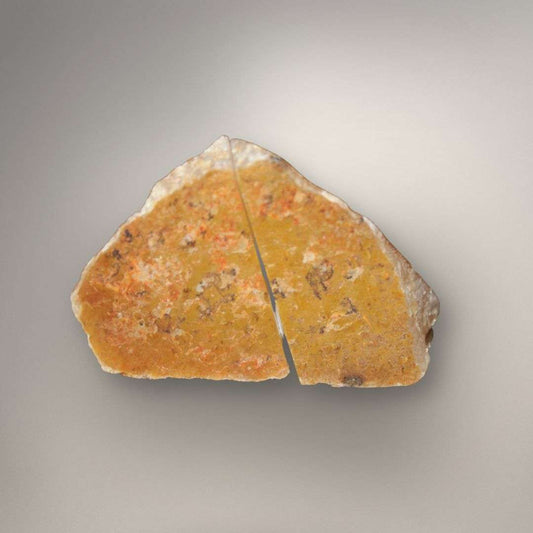
Agate forms as silica-rich solutions deposit layers of microcrystalline quartz within cavities, fractures, or nodules. Over time, these layers build into visible banding that may appear as concentric rings, fortification patterns, waterline structures, or plume-like inclusions. Color variation is influenced by trace minerals and formation conditions, producing tones that range from neutral grays and creams to reds, browns, blues, and occasional greens.
Across different forms, Agate expresses its structure in distinct ways. Polished pieces highlight banding and contrast with a smooth, reflective surface, while natural formations may reveal druzy interiors, crystalline pockets, or rough outer rind. In jewelry and smaller formats, the material is selected for consistency, color balance, and visible pattern within a more compact scale.
Agate is often associated with stability, grounding, and steady focus, valued for its layered structure as a visual reflection of gradual formation and balance over time. It is commonly used in intention-based practices for centering, support, and maintaining direction without urgency. Many are drawn to Agate for its sense of structure and continuity, making it a natural choice for everyday wear, ritual use, and spaces where calm, steady energy is desired.