
Cobaltoan Calcite Stalactite Formation — Natural Cavities, DRC
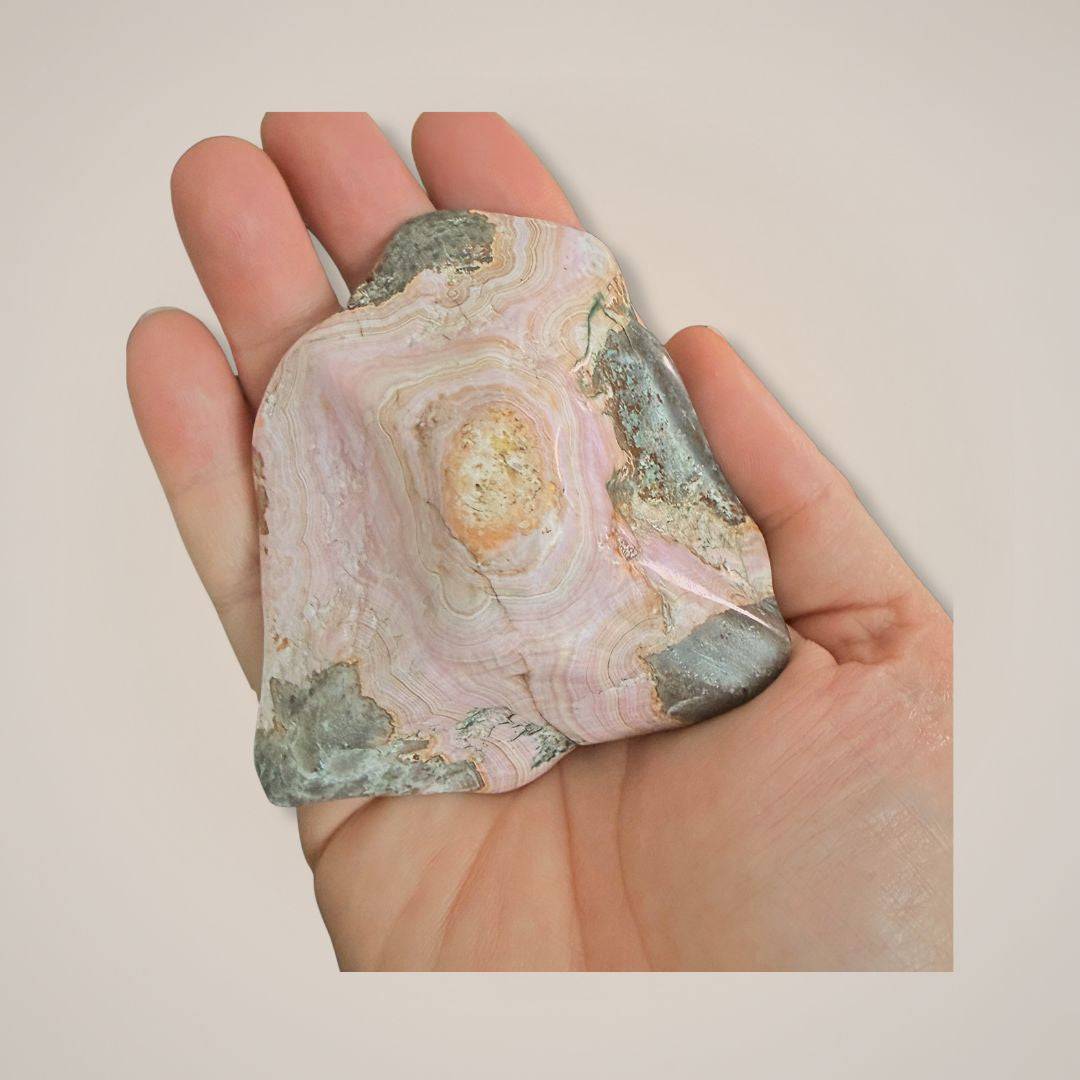
Katanga Copper Crescent Cobaltoan Calcite with pink cobalt-rich banding, subtle green copper influence, natural cavities, and botryoidal calcite interior; approx. 185g / 3.07 × 2.91 × 1.61 in.
 Chakra | Heart
 Primary Intention | Nurturing
 Country of Origin | DRC - Congo


Couldn't load pickup availability
Estimated Delivery: …
What's included in your order?
 30-Days Returns
 Ethically Curated
 Authentic Minerals



Cobaltoan Calcite Stalactite Formation — Natural Cavities, DRC
Cobaltoan Calcite Stalactite Formation (185g) — Katanga Copper Crescent, Congo
Joy • Emotional Healing • Compassion • Transformation
This substantial Cobaltoan Calcite stalactite formation from the Katanga Copper Crescent of the Democratic Republic of Congo preserves a remarkable record of layered mineral growth. Polished surfaces reveal soft pink cobalt-rich calcite banding contrasted by subtle green copper influence, while natural cavities expose the internal architecture of the formation.
Unlike typical polished slices, this specimen retains multiple natural cave structures. One end shows a folded growth structure where mineral deposition changed direction during formation, while a secondary cavity reveals delicate botryoidal calcite — small rounded crystal growth formed during a later mineralization phase. These features make this piece an exceptional example of multi-stage mineral development.
Often referred to as the Aphrodite Stone or Stone of Joy, Cobaltoan Calcite is associated with emotional healing and heart-centered awareness. This particular specimen was selected for how clearly it shows the geological history of the copper-cobalt mineral environment through its preserved growth layers.
Specs
- Weight: 185 g / 6.52 oz
- Dimensions: 3.07 x 2.91 x 1.61 in (78 x 74 x 41 mm)
- Origin: Katanga Copper Crescent, Democratic Republic of Congo
- Formation: Stalactitic Calcite with natural cavities
- Notable Features: Natural cave structures and botryoidal calcite interior
- Chakra: Heart
- Intention: Joy, Compassion, Emotional Healing, Transformation
- Chemical Composition: Cobaltoan Calcite (CaCO₃ with cobalt trace elements)
Geological Notes
Cobaltoan Calcite forms when calcite incorporates cobalt during crystal growth within copper-rich mineral systems. In the Katanga Copper Crescent these deposits often occur alongside copper minerals such as malachite and heterogenite, explaining the occasional green tonal influence seen in some layers.
The preserved stalactitic banding reflects episodic groundwater movement and mineral saturation changes over time. The natural cavities show later dissolution and recrystallization phases, while the botryoidal calcite inside one chamber represents a secondary crystallization event where mineral-rich solutions redeposited calcite in rounded micro-crystal structures.
Mystic Parcel Notes
This specimen was chosen because it visually demonstrates geological process rather than just color. The preserved growth folds, cavities, portals, and internal crystal structures make it a piece that tells the story of formation rather than simply displaying the result.
It represents the Mystic Parcel philosophy that stones can serve as both energetic tools and geological artifacts — a reminder that growth often occurs in layers, through pressure, change, and time.
What you’ll receive
- One (1) Cobaltoan Calcite stalactite formation (exact specimen shown)
- Mystic Parcel specimen identification card
- Mystic Parcel care & intention card
How to use
- Display as a collector specimen highlighting natural mineral formation.
- Use during meditation to support emotional renewal and heart healing.
- Place in sacred space to encourage joy and compassion.
- Hold as a grounding tactile stone during reflection.
Care
- Calcite is soft (Mohs hardness ~3); handle carefully.
- Avoid water and impacts.
- Clean gently with a dry cloth.
- Store away from harder minerals.
Notes: Natural mineral specimens show growth textures and natural surface features. Photos show the exact specimen you will receive. Crystal use is complementary to and not a substitute for professional advice.
| Stone / Material | Cobaltoan Calcite |
|---|---|
| Form | Stalactite Formation |
| Dimensions | 78 x 74 x 41 mm | 3.07 x 2.91 x 1.61 in |
| Weight | 185 g | 6.52 oz |
| Finish | Polished |
| Origin | Katanga Copper Crescent, Democratic Republic of Congo |
| Quantity | Single piece (exact specimen shown) |
| Formation Process | Cobaltoan Calcite forms when calcite incorporates trace cobalt during crystallization, producing its characteristic pink coloration. Stalactitic formations develop through repeated mineral deposition from groundwater solutions over long periods of time. |
|---|---|
| Growth Features | This specimen preserves multiple growth stages including folded mineral layering, natural cavities, and secondary crystallization zones. These features reflect changing mineral chemistry and water flow during formation. |
| Secondary Mineralization | Interior cavities show botryoidal calcite growth, representing a later stage of mineral deposition where new crystal forms developed inside open spaces created during earlier formation phases. |
| Regional Mineral Context | Material from the Katanga Copper Crescent commonly forms alongside copper minerals such as malachite and other cobalt-bearing species. Subtle green tones visible in this specimen are consistent with copper mineral influence typical of the region. |
| Collector Significance | Unlike simple crystal clusters, this specimen preserves structural evidence of multiple geological events including deposition, dissolution, and recrystallization, making it notable as a process-driven formation specimen. |
| Why This Piece Was Chosen | This specimen was selected for how clearly it shows geological process rather than just mineral color. The preserved cavities and internal crystal structures tell a visible story of formation, change, and mineral evolution. |
|---|---|
| Visual Character | Soft pink calcite, natural sculptural contours, and exposed crystal pockets give this specimen a strong sense of depth and movement. The natural caves add dimension rarely seen in polished examples. |
| Energetic Impression | Often called the Aphrodite Stone or Stone of Joy, Cobaltoan Calcite is associated with emotional healing, compassion, joy, and heart-centered awareness. Pieces with visible internal growth are often appreciated as symbols of layered personal growth. |
| Collection Perspective | Mystic Parcel considers this a bridge between collector specimen and functional energy stone. Its size allows it to be displayed as a mineral specimen or held as a tactile reminder of growth through time. |
| Curio Cabinet Context | Pieces like this represent the Curio Cabinet philosophy — stones chosen not only for beauty, but for the story they tell about Earth's history and the processes that shape natural formations. |
Cobaltoan Calcite Stalactite Formation (185g) — Katanga Copper Crescent, Congo
Joy • Emotional Healing • Compassion • Transformation
This substantial Cobaltoan Calcite stalactite formation from the Katanga Copper Crescent of the Democratic Republic of Congo preserves a remarkable record of layered mineral growth. Polished surfaces reveal soft pink cobalt-rich calcite banding contrasted by subtle green copper influence, while natural cavities expose the internal architecture of the formation.
Unlike typical polished slices, this specimen retains multiple natural cave structures. One end shows a folded growth structure where mineral deposition changed direction during formation, while a secondary cavity reveals delicate botryoidal calcite — small rounded crystal growth formed during a later mineralization phase. These features make this piece an exceptional example of multi-stage mineral development.
Often referred to as the Aphrodite Stone or Stone of Joy, Cobaltoan Calcite is associated with emotional healing and heart-centered awareness. This particular specimen was selected for how clearly it shows the geological history of the copper-cobalt mineral environment through its preserved growth layers.
Specs
- Weight: 185 g / 6.52 oz
- Dimensions: 3.07 x 2.91 x 1.61 in (78 x 74 x 41 mm)
- Origin: Katanga Copper Crescent, Democratic Republic of Congo
- Formation: Stalactitic Calcite with natural cavities
- Notable Features: Natural cave structures and botryoidal calcite interior
- Chakra: Heart
- Intention: Joy, Compassion, Emotional Healing, Transformation
- Chemical Composition: Cobaltoan Calcite (CaCO₃ with cobalt trace elements)
Geological Notes
Cobaltoan Calcite forms when calcite incorporates cobalt during crystal growth within copper-rich mineral systems. In the Katanga Copper Crescent these deposits often occur alongside copper minerals such as malachite and heterogenite, explaining the occasional green tonal influence seen in some layers.
The preserved stalactitic banding reflects episodic groundwater movement and mineral saturation changes over time. The natural cavities show later dissolution and recrystallization phases, while the botryoidal calcite inside one chamber represents a secondary crystallization event where mineral-rich solutions redeposited calcite in rounded micro-crystal structures.
Mystic Parcel Notes
This specimen was chosen because it visually demonstrates geological process rather than just color. The preserved growth folds, cavities, portals, and internal crystal structures make it a piece that tells the story of formation rather than simply displaying the result.
It represents the Mystic Parcel philosophy that stones can serve as both energetic tools and geological artifacts — a reminder that growth often occurs in layers, through pressure, change, and time.
What you’ll receive
- One (1) Cobaltoan Calcite stalactite formation (exact specimen shown)
- Mystic Parcel specimen identification card
- Mystic Parcel care & intention card
How to use
- Display as a collector specimen highlighting natural mineral formation.
- Use during meditation to support emotional renewal and heart healing.
- Place in sacred space to encourage joy and compassion.
- Hold as a grounding tactile stone during reflection.
Care
- Calcite is soft (Mohs hardness ~3); handle carefully.
- Avoid water and impacts.
- Clean gently with a dry cloth.
- Store away from harder minerals.
Notes: Natural mineral specimens show growth textures and natural surface features. Photos show the exact specimen you will receive. Crystal use is complementary to and not a substitute for professional advice.
| Stone / Material | Cobaltoan Calcite |
|---|---|
| Form | Stalactite Formation |
| Dimensions | 78 x 74 x 41 mm | 3.07 x 2.91 x 1.61 in |
| Weight | 185 g | 6.52 oz |
| Finish | Polished |
| Origin | Katanga Copper Crescent, Democratic Republic of Congo |
| Quantity | Single piece (exact specimen shown) |
| Formation Process | Cobaltoan Calcite forms when calcite incorporates trace cobalt during crystallization, producing its characteristic pink coloration. Stalactitic formations develop through repeated mineral deposition from groundwater solutions over long periods of time. |
|---|---|
| Growth Features | This specimen preserves multiple growth stages including folded mineral layering, natural cavities, and secondary crystallization zones. These features reflect changing mineral chemistry and water flow during formation. |
| Secondary Mineralization | Interior cavities show botryoidal calcite growth, representing a later stage of mineral deposition where new crystal forms developed inside open spaces created during earlier formation phases. |
| Regional Mineral Context | Material from the Katanga Copper Crescent commonly forms alongside copper minerals such as malachite and other cobalt-bearing species. Subtle green tones visible in this specimen are consistent with copper mineral influence typical of the region. |
| Collector Significance | Unlike simple crystal clusters, this specimen preserves structural evidence of multiple geological events including deposition, dissolution, and recrystallization, making it notable as a process-driven formation specimen. |
| Why This Piece Was Chosen | This specimen was selected for how clearly it shows geological process rather than just mineral color. The preserved cavities and internal crystal structures tell a visible story of formation, change, and mineral evolution. |
|---|---|
| Visual Character | Soft pink calcite, natural sculptural contours, and exposed crystal pockets give this specimen a strong sense of depth and movement. The natural caves add dimension rarely seen in polished examples. |
| Energetic Impression | Often called the Aphrodite Stone or Stone of Joy, Cobaltoan Calcite is associated with emotional healing, compassion, joy, and heart-centered awareness. Pieces with visible internal growth are often appreciated as symbols of layered personal growth. |
| Collection Perspective | Mystic Parcel considers this a bridge between collector specimen and functional energy stone. Its size allows it to be displayed as a mineral specimen or held as a tactile reminder of growth through time. |
| Curio Cabinet Context | Pieces like this represent the Curio Cabinet philosophy — stones chosen not only for beauty, but for the story they tell about Earth's history and the processes that shape natural formations. |
- 5 stars: 2 (100%)
- 4 stars: 0 (0%)
- 3 stars: 0 (0%)
- 2 stars: 0 (0%)
- 1 star: 0 (0%)
Absolutely exquisite piece!! Very happy with my purchase!! Thank you!!


