


Mystic Parcel
Fossilized Megalodon Tooth 5.18" from North Carolina
 Chakra | Root and Sacral
 Primary Intention | Vitality
 Country of Origin | United States


This specimen was selected for its balance of size, preservation, and display presence. The clean enamel blade, defined bourlette, and natural coloration make it a strong representative example of North Carolina Megalodon material suitable for both fossil collectors and Curio Cabinet displays.
Couldn't load pickup availability
Estimated Delivery: …
 30-Days Returns
 Ethically Curated
 Authentic Minerals



Fossilized Megalodon Tooth 5.18" from North Carolina
Fossilized Megalodon Shark Tooth — North Carolina (247 g)
Ancient Power • Deep Time • Protection • Earth Memory
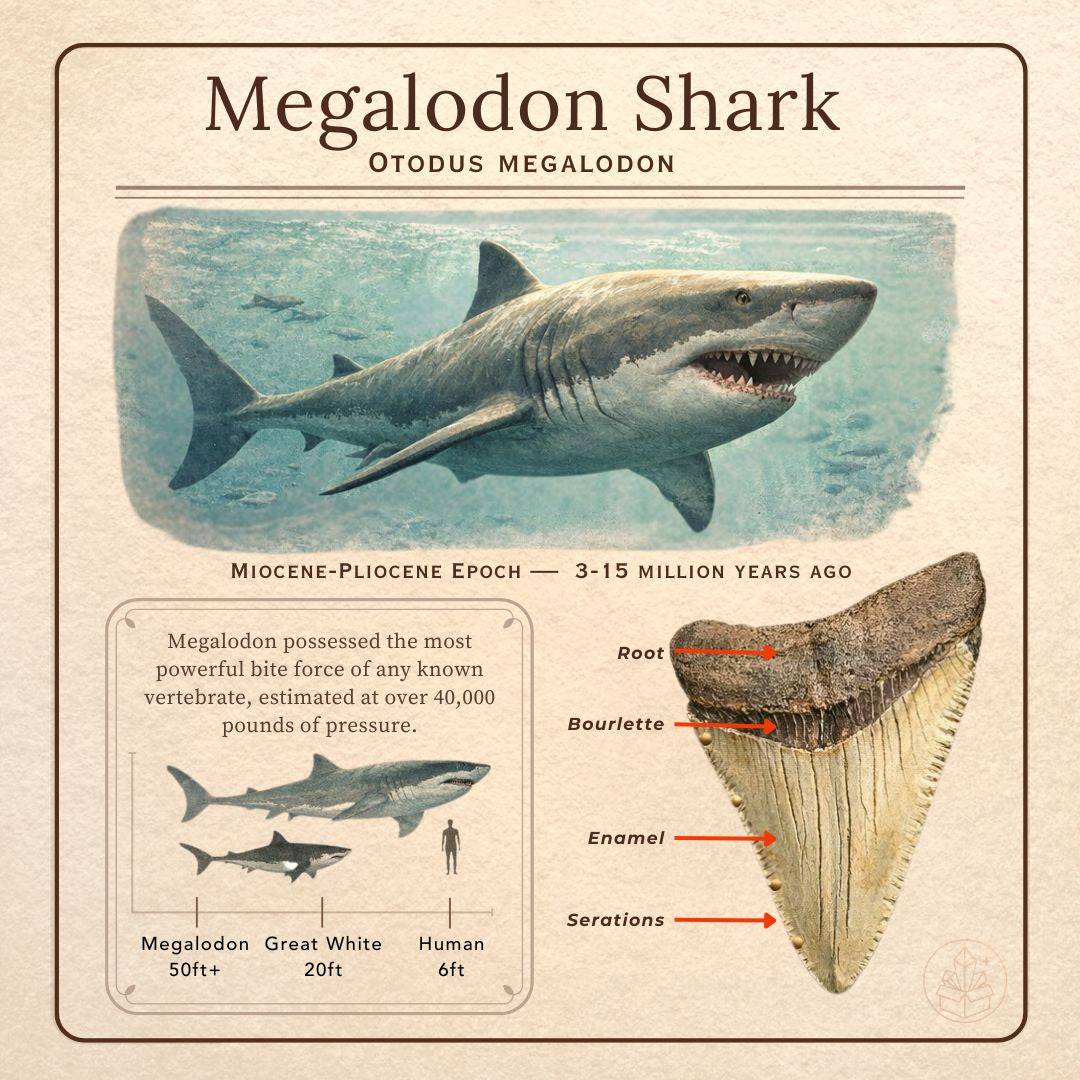
This authentic fossilized Megalodon shark tooth from coastal North Carolina represents one of the most iconic predators in Earth’s natural history. Dating to the Miocene–Pliocene epochs approximately 3 to 15 million years ago, Megalodon (Otodus megalodon) was among the largest sharks ever to inhabit the oceans, reaching estimated lengths of 50–60 feet.
This specimen was selected for its strong display presence, clean enamel blade, visible serrations, and natural root preservation. The bourlette remains well defined, and the enamel shows natural mineral coloration developed during fossilization. Teeth with this combination of size, symmetry, and preservation are favored by collectors as display specimens due to their balance of scientific interest and visual impact.
Unlike many fossil teeth on the market, this specimen remains in its natural state and no stabilization or repair work, preserving the authentic geological character.
Fossilized Megalodon Tooth Specs
- Weight: 247 g / 8.71 oz
- Dimensions: Approx. 4.8 x 3.8 x 1 in / 122 x 97 x 25 mm (Diagonal 5.18 in / 131mm)
- Display: Museum exhibition mount with engraved specimen plate
- Species: Otodus megalodon
- Family: Otodontidae
- Location: North Carolina, USA
- Formation: Atlantic Coastal Plain marine deposits
- Epoch: Miocene–Pliocene
- Age: Approx. 3–15 million years old
- Material Type: Fossil shark tooth
- Preservation: Natural, no repairs or stabilization
- Features: Visible serrations, defined bourlette, intact enamel blade
- Color: Natural tan enamel with dark mineralized root
- Intention: Ancient Power • Protection • Earth Memory
Geological Notes
Fossilized Megalodon teeth are among the most recognizable fossils due to their size and preservation potential. Unlike bone, shark teeth are composed primarily of highly mineralized dentin and enamel, which fossilize readily in marine sediment environments. Coastal deposits of North Carolina are especially known for producing well-preserved Megalodon teeth with distinctive coloration influenced by local mineral chemistry.
These fossils originate from ancient marine environments where Megalodon thrived as an apex predator. Over millions of years, burial within sediment and gradual mineralization preserved the structure of the tooth while introducing the natural coloration seen today. Variations in root color and enamel tone reflect the unique geochemical environment of fossilization rather than any artificial treatment.
Specimen Condition
This specimen shows natural wear consistent with authentic fossilization and marine deposition. Minor surface variations, enamel stress lines, root texture variation, and color zoning are natural characteristics of genuine Megalodon teeth and contribute to the individuality of each specimen.
No reconstruction, filling, or artificial enhancement is present. The tooth remains in natural collector condition.
Energetic Notes
Fossil specimens are often associated with grounding energy, ancestral connection, and the deep stability of Earth’s ancient history. Megalodon teeth in particular are sometimes viewed as symbols of strength, resilience, and primal protection due to their association with one of the most powerful predators to ever exist.
This specimen carries a strong presence suitable for collectors drawn to themes of deep time, transformation, and the enduring intelligence of the natural world.
Placement Ideas
This specimen displays beautifully on the included museum-style stand and is ideal for a curio cabinet, collector shelf, study, or office where its scale and geological history can be appreciated. Its size places it within the desirable display range for Megalodon teeth, offering strong visual impact without requiring large display space.
Mystic Parcel Notes
This specimen was selected for its balance of size, preservation, and display presence. The clean enamel blade, defined bourlette, and natural coloration make it a strong representative example of North Carolina Megalodon material suitable for both fossil collectors and Curio Cabinet displays.
Included: Museum exhibition display stand and engraved specimen label shown in photographs.
Please note: Fossil identifications are based on accepted paleontological classification of Megalodon shark teeth. Individual teeth cannot typically be attributed to a specific animal but represent authentic material from the species Otodus megalodon.
Crystal and fossil work is a complementary spiritual practice and not a substitute for professional medical, legal, or financial advice.
| Specification | Details |
|---|---|
| Specimen Type | Megalodon Shark Tooth Fossil |
| Species | Otodus megalodon |
| Tooth Length | 5.18 in / 13.15 cm |
| Weight | 247 g / 8.71 oz |
| Preservation | Natural, no repairs or stabilization |
| Features | Visible serrations, defined bourlette, intact enamel blade |
| Geological Epoch | Miocene–Pliocene |
| Approximate Age | Approx. 3–15 million years old |
| Origin | North Carolina, USA |
| Formation | Atlantic Coastal Plain marine deposits |
| Display | Museum exhibition mount included |
| Quantity | Single specimen |
| Geological Notes | Details |
|---|---|
| Geological Context | This Megalodon tooth originates from marine fossil-bearing deposits of North Carolina, part of the Atlantic Coastal Plain, a region known for producing well-preserved fossil shark teeth. |
| Ancient Environment | During the Miocene–Pliocene epochs, this region was covered by warm shallow seas that supported a wide range of marine life, including apex predators such as Megalodon. |
| Fossilization Process | Over millions of years, burial within marine sediments allowed the original tooth structure to mineralize while preserving the form, serrations, and root details valued by collectors. |
| Color Development | Natural variation in enamel and root coloration reflects the chemistry of the surrounding sediments and groundwater during fossilization rather than artificial treatment. |
| Collector Relevance | North Carolina Megalodon teeth are sought after for their recognizable preservation, natural color range, and importance within American fossil collecting. |
| Specimen Condition | Details |
|---|---|
| Overall Condition | Collector-grade natural fossil specimen with strong display presence and preserved structural detail. |
| Preservation Status | Natural condition with no repairs, reconstruction, or stabilization. |
| Enamel Blade | Clean enamel blade with natural fossil coloration and intact visual structure. |
| Serrations | Visible serrations remain present and contribute to the collector appeal of the specimen. |
| Bourlette & Root | Defined bourlette and natural root texture preserved as part of the authentic fossil character. |
| Natural Variation | Minor surface variation, mineral color zoning, and fossil wear are normal features of authentic Megalodon teeth and should be expected. |
| Mystic Parcel Notes | Details |
|---|---|
| Why It Was Selected | This specimen was chosen for its size, preserved collector features, and strong visual presence as a Curio Cabinet fossil display piece. |
| Collector Appeal | The combination of 5.18 inch length, visible serrations, defined bourlette, and natural preservation places this tooth in a desirable display range for collectors. |
| Display Presence | Mounted on its museum exhibition stand, this specimen presents as a refined natural history object suited for a curio cabinet, study, office, or collector shelf. |
| Energetic Tone | Often associated with ancient power, protection, and deep earth memory, Megalodon teeth carry a grounded presence that resonates with themes of resilience and primal strength. |
| Included Presentation | Museum exhibition mount and engraved specimen label included as shown in listing photographs. |
| Mystic Parcel Perspective | Selected not only for scientific and collector value, but for the sense of ancient presence it brings to a thoughtfully curated space. |
This specimen is a fossilized Megalodon tooth from an extinct prehistoric shark species. It is not derived from a living, threatened, or endangered modern animal, and it is offered as a natural-history fossil specimen. Mystic Parcel lists fossil specimens with attention to lawful sourcing, accurate identification, and clear locality/provenance information when available.
Fossilized Megalodon Shark Tooth — North Carolina (247 g)
Ancient Power • Deep Time • Protection • Earth Memory
This authentic fossilized Megalodon shark tooth from coastal North Carolina represents one of the most iconic predators in Earth’s natural history. Dating to the Miocene–Pliocene epochs approximately 3 to 15 million years ago, Megalodon (Otodus megalodon) was among the largest sharks ever to inhabit the oceans, reaching estimated lengths of 50–60 feet.
This specimen was selected for its strong display presence, clean enamel blade, visible serrations, and natural root preservation. The bourlette remains well defined, and the enamel shows natural mineral coloration developed during fossilization. Teeth with this combination of size, symmetry, and preservation are favored by collectors as display specimens due to their balance of scientific interest and visual impact.
Unlike many fossil teeth on the market, this specimen remains in its natural state and no stabilization or repair work, preserving the authentic geological character.
Fossilized Megalodon Tooth Specs
- Weight: 247 g / 8.71 oz
- Dimensions: Approx. 4.8 x 3.8 x 1 in / 122 x 97 x 25 mm (Diagonal 5.18 in / 131mm)
- Display: Museum exhibition mount with engraved specimen plate
- Species: Otodus megalodon
- Family: Otodontidae
- Location: North Carolina, USA
- Formation: Atlantic Coastal Plain marine deposits
- Epoch: Miocene–Pliocene
- Age: Approx. 3–15 million years old
- Material Type: Fossil shark tooth
- Preservation: Natural, no repairs or stabilization
- Features: Visible serrations, defined bourlette, intact enamel blade
- Color: Natural tan enamel with dark mineralized root
- Intention: Ancient Power • Protection • Earth Memory
Geological Notes
Fossilized Megalodon teeth are among the most recognizable fossils due to their size and preservation potential. Unlike bone, shark teeth are composed primarily of highly mineralized dentin and enamel, which fossilize readily in marine sediment environments. Coastal deposits of North Carolina are especially known for producing well-preserved Megalodon teeth with distinctive coloration influenced by local mineral chemistry.
These fossils originate from ancient marine environments where Megalodon thrived as an apex predator. Over millions of years, burial within sediment and gradual mineralization preserved the structure of the tooth while introducing the natural coloration seen today. Variations in root color and enamel tone reflect the unique geochemical environment of fossilization rather than any artificial treatment.
Specimen Condition
This specimen shows natural wear consistent with authentic fossilization and marine deposition. Minor surface variations, enamel stress lines, root texture variation, and color zoning are natural characteristics of genuine Megalodon teeth and contribute to the individuality of each specimen.
No reconstruction, filling, or artificial enhancement is present. The tooth remains in natural collector condition.
Energetic Notes
Fossil specimens are often associated with grounding energy, ancestral connection, and the deep stability of Earth’s ancient history. Megalodon teeth in particular are sometimes viewed as symbols of strength, resilience, and primal protection due to their association with one of the most powerful predators to ever exist.
This specimen carries a strong presence suitable for collectors drawn to themes of deep time, transformation, and the enduring intelligence of the natural world.
Placement Ideas
This specimen displays beautifully on the included museum-style stand and is ideal for a curio cabinet, collector shelf, study, or office where its scale and geological history can be appreciated. Its size places it within the desirable display range for Megalodon teeth, offering strong visual impact without requiring large display space.
Mystic Parcel Notes
This specimen was selected for its balance of size, preservation, and display presence. The clean enamel blade, defined bourlette, and natural coloration make it a strong representative example of North Carolina Megalodon material suitable for both fossil collectors and Curio Cabinet displays.
Included: Museum exhibition display stand and engraved specimen label shown in photographs.
Please note: Fossil identifications are based on accepted paleontological classification of Megalodon shark teeth. Individual teeth cannot typically be attributed to a specific animal but represent authentic material from the species Otodus megalodon.
Crystal and fossil work is a complementary spiritual practice and not a substitute for professional medical, legal, or financial advice.
| Specification | Details |
|---|---|
| Specimen Type | Megalodon Shark Tooth Fossil |
| Species | Otodus megalodon |
| Tooth Length | 5.18 in / 13.15 cm |
| Weight | 247 g / 8.71 oz |
| Preservation | Natural, no repairs or stabilization |
| Features | Visible serrations, defined bourlette, intact enamel blade |
| Geological Epoch | Miocene–Pliocene |
| Approximate Age | Approx. 3–15 million years old |
| Origin | North Carolina, USA |
| Formation | Atlantic Coastal Plain marine deposits |
| Display | Museum exhibition mount included |
| Quantity | Single specimen |
| Geological Notes | Details |
|---|---|
| Geological Context | This Megalodon tooth originates from marine fossil-bearing deposits of North Carolina, part of the Atlantic Coastal Plain, a region known for producing well-preserved fossil shark teeth. |
| Ancient Environment | During the Miocene–Pliocene epochs, this region was covered by warm shallow seas that supported a wide range of marine life, including apex predators such as Megalodon. |
| Fossilization Process | Over millions of years, burial within marine sediments allowed the original tooth structure to mineralize while preserving the form, serrations, and root details valued by collectors. |
| Color Development | Natural variation in enamel and root coloration reflects the chemistry of the surrounding sediments and groundwater during fossilization rather than artificial treatment. |
| Collector Relevance | North Carolina Megalodon teeth are sought after for their recognizable preservation, natural color range, and importance within American fossil collecting. |
| Specimen Condition | Details |
|---|---|
| Overall Condition | Collector-grade natural fossil specimen with strong display presence and preserved structural detail. |
| Preservation Status | Natural condition with no repairs, reconstruction, or stabilization. |
| Enamel Blade | Clean enamel blade with natural fossil coloration and intact visual structure. |
| Serrations | Visible serrations remain present and contribute to the collector appeal of the specimen. |
| Bourlette & Root | Defined bourlette and natural root texture preserved as part of the authentic fossil character. |
| Natural Variation | Minor surface variation, mineral color zoning, and fossil wear are normal features of authentic Megalodon teeth and should be expected. |
| Mystic Parcel Notes | Details |
|---|---|
| Why It Was Selected | This specimen was chosen for its size, preserved collector features, and strong visual presence as a Curio Cabinet fossil display piece. |
| Collector Appeal | The combination of 5.18 inch length, visible serrations, defined bourlette, and natural preservation places this tooth in a desirable display range for collectors. |
| Display Presence | Mounted on its museum exhibition stand, this specimen presents as a refined natural history object suited for a curio cabinet, study, office, or collector shelf. |
| Energetic Tone | Often associated with ancient power, protection, and deep earth memory, Megalodon teeth carry a grounded presence that resonates with themes of resilience and primal strength. |
| Included Presentation | Museum exhibition mount and engraved specimen label included as shown in listing photographs. |
| Mystic Parcel Perspective | Selected not only for scientific and collector value, but for the sense of ancient presence it brings to a thoughtfully curated space. |
This specimen is a fossilized Megalodon tooth from an extinct prehistoric shark species. It is not derived from a living, threatened, or endangered modern animal, and it is offered as a natural-history fossil specimen. Mystic Parcel lists fossil specimens with attention to lawful sourcing, accurate identification, and clear locality/provenance information when available.


