
Crocoite (264g) — Red Crystals on Dark Matrix, Australia
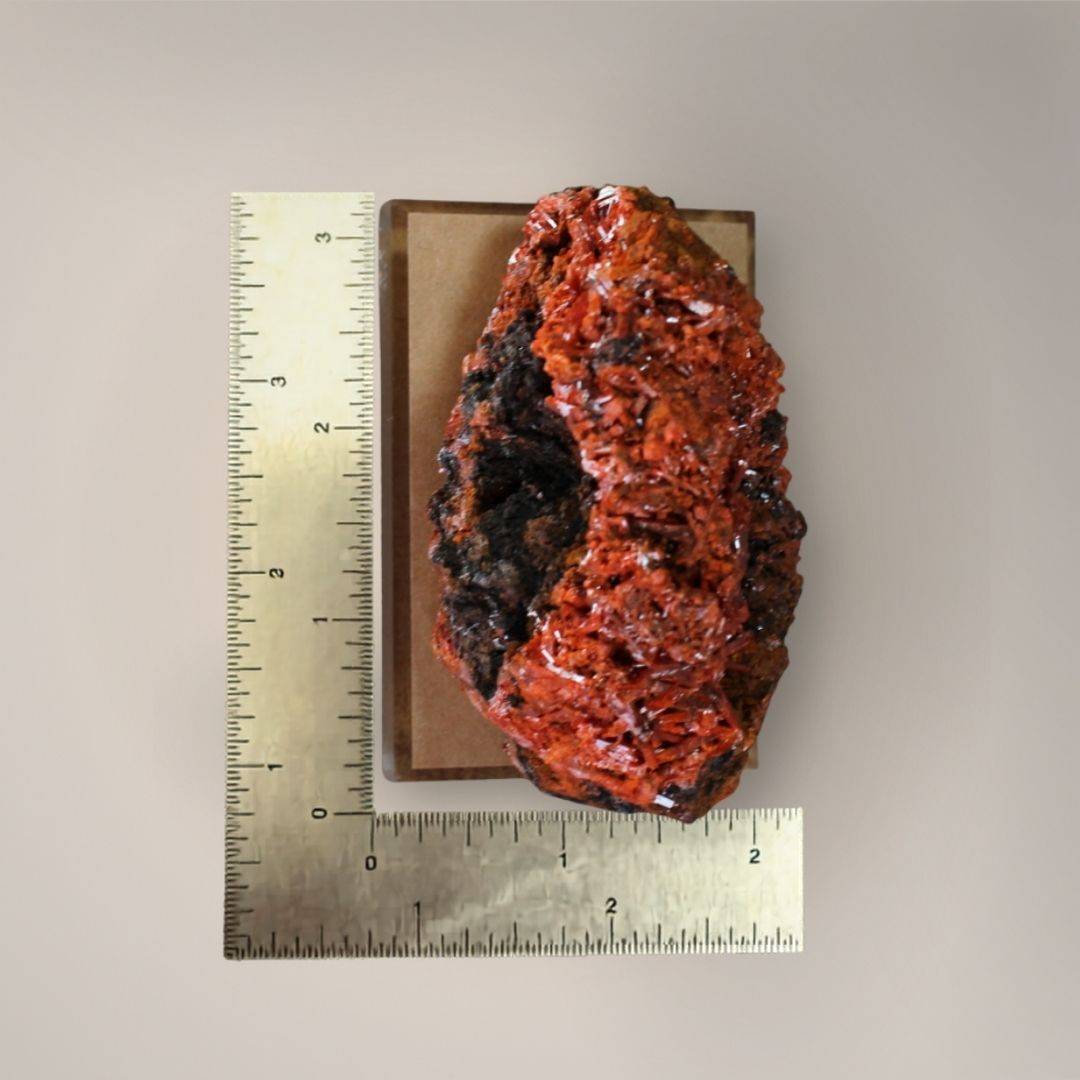
Australian crocoite with lustrous orange-red prisms around a recessed area of dark matrix and dense crystal coverage on the reverse, approx. 264g / 3.01 × 1.81 × 1.50 in.
 Chakra | Root
 Primary Intention | Vitality
 Country of Origin | Australia


Couldn't load pickup availability
Estimated Delivery: …
What's included in your order?
 30-Days Returns
 Ethically Curated
 Authentic Minerals



Crocoite (264g) — Red Crystals on Dark Matrix, Australia
Crocoite (264g) — Orange-Red Crystals on Dark Matrix, Australia
Strength · Vitality · Connection
This Australian crocoite specimen has lustrous orange-red crystals along the edges of a broad recess in the dark matrix. Short prisms overlap in dense groups, and individual crystal faces catch the light along the upper edge and lower rim.
Turn the specimen around and the balance shifts. The reverse carries more continuous crystal coverage, with small patches of rust-brown and black matrix showing through between the crystals. The two faces give you a clear view of how the crystal coverage changes across the same piece.
Specimen Details
- Material: Crocoite, a lead chromate mineral (PbCrO4)
- Locality: Red Lead Mine → Dundas mineral field → Zeehan mining district → West Coast municipality → Tasmania → Australia
- Formation: Secondary crocoite crystals on matrix
- Features: Lustrous prismatic crystals, a recessed front face, and denser crystal coverage on the reverse
- Color: Orange-red crystals with dark brown, black, and rust-brown matrix
- Finish: Unpolished crystalline surfaces
- Size: Approx. 3.01 × 1.81 × 1.50 in. (76.5 × 46 × 38 mm)
- Specimen Size: Small Cabinet
- Weight: 264g
- Selection: Exact specimen shown
Geological Notes
Crocoite is a secondary lead chromate that forms in the oxidized zones of lead deposits. In the Dundas mineral field, chromium-bearing minerals in the surrounding rocks supplied chromium, while weathering of the lead ores supplied lead. On this piece, the dark recess between crystal groups makes the boundary between the crocoite and its host matrix easy to see.
Mystic Parcel Notes
For cabinet display, angle the base so the recessed front and part of the crystal-covered reverse are both visible. A light from the side helps bring out individual prism faces within the closely packed clusters.
In Mystic Parcel’s intention practice, this specimen is associated with the Root chakra and the themes of Strength, Vitality, and Connection. It can serve as a visual focus for reflecting on where you draw strength and what helps you stay connected to it.
What you’ll receive
- The exact 264g crocoite specimen photographed
- The display base shown
- A standard Mystic Parcel Specimen Card
How to use
- Display in an enclosed mineral cabinet on a stable, level shelf.
- Use a loupe to observe the short prisms and reflective faces without touching the crystals.
Care
- Contains lead chromate. Keep out of reach of children and pets and away from food, drink, and food preparation surfaces.
- Handle as little as possible. When moving the piece, support the base and avoid touching the crystal surfaces. Wash hands after handling.
- Keep dry. Avoid soaking, scrubbing, cutting, or grinding the specimen. Avoid creating or inhaling dust.
| Specification | Details |
|---|---|
| Mineral | Crocoite, a lead chromate mineral (PbCrO4) |
| Locality | Red Lead Mine, Dundas mineral field, Zeehan mining district, West Coast municipality, Tasmania, Australia |
| Weight | 264 g |
| Approximate dimensions | 3.01 × 1.81 × 1.50 in. (76.5 × 46 × 38 mm) |
| Specimen size | Small Cabinet |
| Color | Orange-red crystals with dark brown, black, and rust-brown matrix |
| Crystal formation | Secondary crocoite crystals on matrix |
| Features | Lustrous prismatic crystals, a recessed front face, and denser crystal coverage on the reverse |
| Finish | Unpolished crystalline surfaces |
| Selection | Exact Australia crocoite specimen shown |
| Included | Display base shown and a standard Mystic Parcel Specimen Card |
| Material or construction detail | Description |
|---|---|
| Primary mineral | Crocoite, a naturally occurring lead chromate mineral (PbCrO4) |
| Crystal structure | Lustrous, unpolished orange-red prismatic crystals arranged in dense overlapping groups |
| Host matrix | Dark matrix with brown, black, and rust-brown areas visible between the crystals |
| Natural formation | Secondary crocoite crystals formed on matrix in the oxidized zone of a lead deposit |
| Surface and coverage | The front has a broad recessed area bordered by crystal groups; the reverse has more continuous crystal coverage |
This Australia crocoite specimen is a natural, unpolished mineral piece. It contains lead chromate: handle as little as possible, keep away from children, pets, food, and drink, and wash hands after handling. Keep dry and avoid creating or inhaling dust.
Crocoite is a secondary lead chromate that forms in the oxidized zones of lead deposits. In the Dundas mineral field, chromium-bearing minerals in the surrounding rocks supplied chromium, while weathering of the lead ores supplied lead. On this piece, the dark recess between crystal groups makes the boundary between the crocoite and its host matrix easy to see.
For cabinet display, angle the base so the recessed front and part of the crystal-covered reverse are both visible. A light from the side helps bring out individual prism faces within the closely packed clusters.
In Mystic Parcel’s intention practice, this specimen is associated with the Root chakra and the themes of Strength, Vitality, and Connection. It can serve as a visual focus for reflecting on where you draw strength and what helps you stay connected to it.


