
Fluorescent Adamite & Calcite on Limonite — Ojuela, Mexico
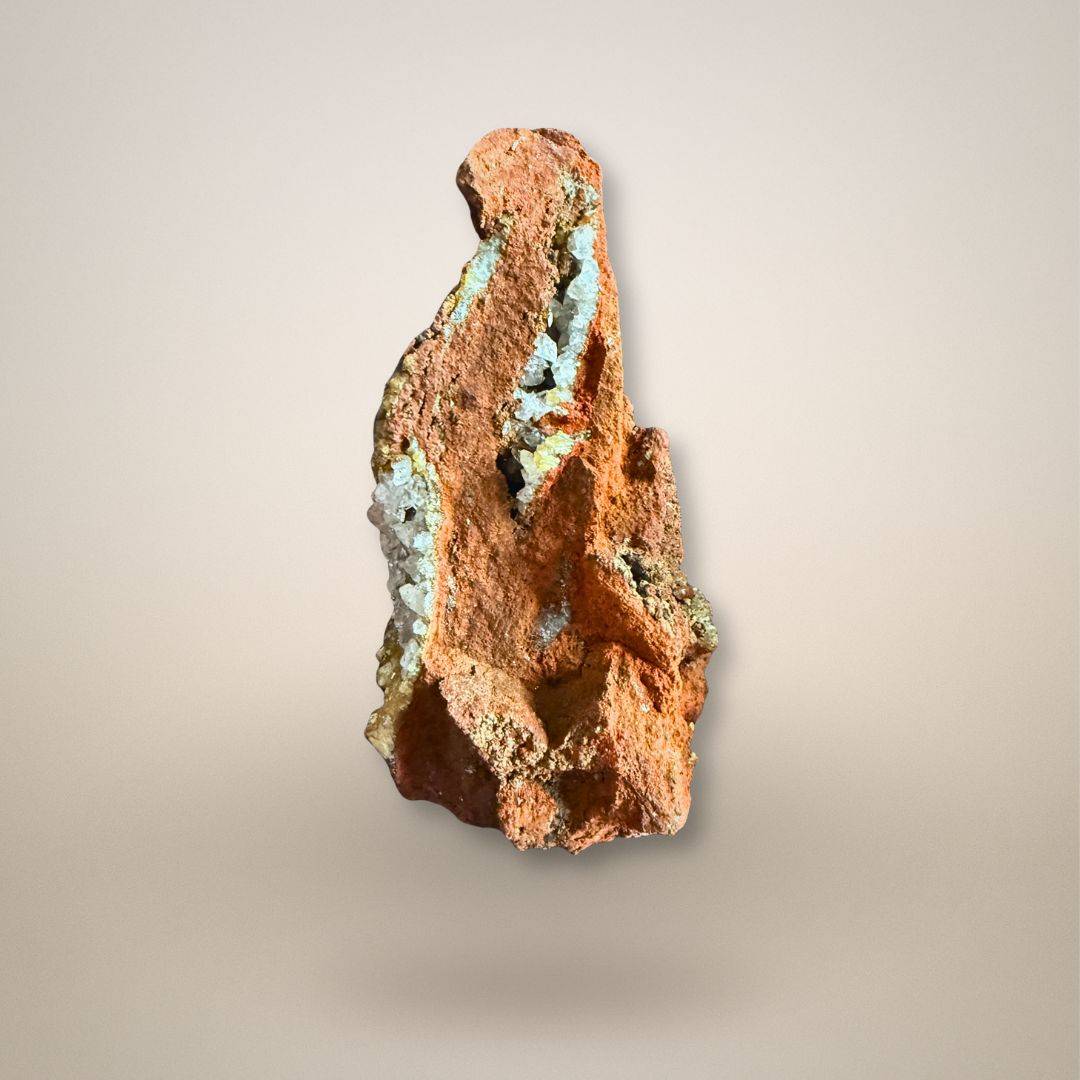
Ojuela Mine adamite with honey-yellow to yellow-green crystal growth, translucent calcite, rust-brown limonite matrix, and a vivid green response under UV; approx. 448g / 4.13 × 3.54 × 2.17 in.
 Chakra | Solar Plexus
 Primary Intention | Growth
 Country of Origin | Mexico


Couldn't load pickup availability
Estimated Delivery: …
What's included in your order?
 30-Days Returns
 Ethically Curated
 Authentic Minerals



Fluorescent Adamite & Calcite on Limonite — Ojuela, Mexico
Fluorescent Adamite with Calcite on Limonite — Ojuela Mine, Mexico
Clarity • Focus • Growth
This adamite and calcite specimen from the Ojuela Mine in Mapimí, Durango, brings together several characteristics associated with this historic locality: honey-yellow to yellow-green adamite, translucent calcite, and an iron-rich limonite matrix. Rather than forming on a single flat display surface, the mineralization continues through cavities and across several faces of the specimen, giving the piece a distinctly three-dimensional character.
Across the primary display face, a concentrated band of white to translucent calcite crosses the rust-brown matrix, bordered by areas of adamite ranging from warm yellow to yellow-green. Smaller pockets of mineralization continue around the sides and reverse, with open cavities preserving the irregular structure of the oxidized host rock.
Under UV illumination, the adamite produces a vivid green fluorescent response. The contrast is especially striking because the fluorescence follows specific mineralized areas rather than illuminating the specimen uniformly, revealing the distribution of adamite within and around the calcite-rich zones.
This specimen comes from the Patrick & Alexis Barela Collection and was selected by Mystic Parcel for its Ojuela association, strong fluorescence, contrasting crystal growth, and the way its mineralization can be examined from multiple directions.
Specimen Details
- Material: Adamite with Calcite on Limonite
- Locality: Ojuela Mine → Mapimí → Durango → Mexico
- Formation: Secondary adamite developed within the oxidized zone of a zinc-bearing ore deposit, accompanied by calcite crystallization within open cavities in the iron-rich matrix
- Features: Honey-yellow to yellow-green adamite, white to translucent calcite, open cavities, rust-brown limonite matrix, and strong green UV fluorescence
- UV Response: Strong green response under UV illumination
- Finish: Natural
- Size: Approx. 4.13 × 3.54 × 2.17 in. / 105 × 90 × 55 mm
- Specimen Size: Small Cabinet
- Weight: 448g
- Provenance: Patrick & Alexis Barela Collection
- Selection: Exact specimen shown
Geological Notes
Adamite is a secondary zinc arsenate mineral that forms in the oxidized portions of zinc- and lead-bearing ore deposits. The Ojuela Mine at Mapimí, Durango, is one of the best-known localities for adamite, where alteration of earlier ore minerals created conditions for a diverse suite of secondary minerals to develop within fractures, cavities, and iron-rich matrix.
In this specimen, the rust-brown limonite records that oxidized environment. Adamite occurs along exposed surfaces and within cavities, while calcite forms a conspicuous crystal-rich band across the main display face. The open structure of the matrix allowed later crystal growth to develop into the spaces left within the host rock, creating the alternating crystalline, granular, and iron-rich textures visible across the specimen.
The fluorescence provides another way to read that mineralization. Under UV light, adamite-bearing areas respond with vivid green fluorescence, making portions of the mineral distribution considerably more apparent than they are under ordinary illumination.
What You’ll Receive
- One (1) Adamite with Calcite on Limonite specimen from Ojuela Mine, Mapimí, Durango, Mexico — exact specimen shown
- Mystic Parcel specimen identification card
How to Use
- Display as a small cabinet specimen with the primary calcite-rich face oriented toward the viewer.
- View under both normal light and UV illumination to compare visible mineral growth with the fluorescent adamite distribution.
- Use as a locality specimen when studying secondary mineral formation within oxidized ore deposits.
- For reflective use, allow the changing textures, cavities, and mineral growth to serve as a visual anchor for clarity, focus, or gradual growth.
Care
- Handle carefully and support the specimen from the matrix rather than gripping exposed crystal areas.
- Dust gently with a soft, dry brush and avoid abrasive cleaning.
- Avoid acids and chemical cleaners, which can damage calcite and other mineral surfaces.
- Adamite contains arsenic as part of its mineral structure. Handle as a mineral specimen, avoid grinding or creating dust, wash hands after handling, and do not use in water-based crystal elixirs.
Mystic Parcel Notes
What makes this specimen compelling is not a single oversized crystal but the association as a whole. Adamite, calcite, and limonite remain visibly interconnected across the specimen, allowing the geology to be followed from one surface to another. In normal light, the warm adamite and pale calcite contrast sharply against the oxidized matrix; under UV, a second pattern emerges as the adamite becomes intensely fluorescent.
The Patrick & Alexis Barela Collection provenance adds another layer of context to a specimen that already works particularly well as both a display piece and an Ojuela locality specimen.
For intention work, adamite may be used symbolically as an ally for clarity, focus, and gradual growth. Its formation within an altered and changing geological environment makes it a natural visual anchor for reflection on development, adaptation, and what can emerge as conditions change.
Notes: This is a natural mineral specimen and may show irregular matrix surfaces, cavities, contact areas, small edge losses, fractures, color variation, and other features associated with natural formation and collection. Fluorescent appearance may vary with UV wavelength, lamp intensity, ambient light, camera settings, and viewing conditions. Photos show the exact specimen you will receive. Intention language is symbolic and reflective rather than a statement of measurable mineral effects.
| Key | Value |
|---|---|
| Material | Adamite with Calcite on Limonite |
| Locality | Ojuela Mine → Mapimí → Durango → Mexico |
| Formation | Secondary adamite within oxidized zone of zinc-bearing ore deposit |
| Features | Honey-yellow to yellow-green adamite, white to translucent calcite, open cavities, rust-brown limonite matrix, strong green UV fluorescence |
| UV Response | Strong green response under UV illumination |
| Finish | Natural |
| Size | Approx. 4.13 × 3.54 × 2.17 in. / 105 × 90 × 55 mm |
| Specimen Size | Small Cabinet |
| Weight | 448g |
| Provenance | Patrick & Alexis Barela Collection |
| Selection | Exact specimen shown |
| Material | Details |
|---|---|
| Adamite | A secondary zinc arsenate mineral commonly found in oxidized ore deposits, known for its vibrant color and fluorescence. |
| Calcite | Translucent mineral forming a prominent crystal-rich band across the specimen, often associated with other minerals in geological formations. |
| Limonite | An iron-rich matrix that provides structure and records the oxidized environment where the minerals formed. |
What makes this specimen compelling is not a single oversized crystal but the association as a whole. Adamite, calcite, and limonite remain visibly interconnected across the specimen, allowing the geology to be followed from one surface to another. In normal light, the warm adamite and pale calcite contrast sharply against the oxidized matrix; under UV, a second pattern emerges as the adamite becomes intensely fluorescent.
The Patrick & Alexis Barela Collection provenance adds another layer of context to a specimen that already works particularly well as both a display piece and an Ojuela locality specimen.
For intention work, adamite may be used symbolically as an ally for clarity, focus, and gradual growth. Its formation within an altered and changing geological environment makes it a natural visual anchor for reflection on development, adaptation, and what can emerge as conditions change.
Fluorescent Adamite with Calcite on Limonite — Ojuela Mine, Mexico
Clarity • Focus • Growth
This adamite and calcite specimen from the Ojuela Mine in Mapimí, Durango, brings together several characteristics associated with this historic locality: honey-yellow to yellow-green adamite, translucent calcite, and an iron-rich limonite matrix. Rather than forming on a single flat display surface, the mineralization continues through cavities and across several faces of the specimen, giving the piece a distinctly three-dimensional character.
Across the primary display face, a concentrated band of white to translucent calcite crosses the rust-brown matrix, bordered by areas of adamite ranging from warm yellow to yellow-green. Smaller pockets of mineralization continue around the sides and reverse, with open cavities preserving the irregular structure of the oxidized host rock.
Under UV illumination, the adamite produces a vivid green fluorescent response. The contrast is especially striking because the fluorescence follows specific mineralized areas rather than illuminating the specimen uniformly, revealing the distribution of adamite within and around the calcite-rich zones.
This specimen comes from the Patrick & Alexis Barela Collection and was selected by Mystic Parcel for its Ojuela association, strong fluorescence, contrasting crystal growth, and the way its mineralization can be examined from multiple directions.
Specimen Details
- Material: Adamite with Calcite on Limonite
- Locality: Ojuela Mine → Mapimí → Durango → Mexico
- Formation: Secondary adamite developed within the oxidized zone of a zinc-bearing ore deposit, accompanied by calcite crystallization within open cavities in the iron-rich matrix
- Features: Honey-yellow to yellow-green adamite, white to translucent calcite, open cavities, rust-brown limonite matrix, and strong green UV fluorescence
- UV Response: Strong green response under UV illumination
- Finish: Natural
- Size: Approx. 4.13 × 3.54 × 2.17 in. / 105 × 90 × 55 mm
- Specimen Size: Small Cabinet
- Weight: 448g
- Provenance: Patrick & Alexis Barela Collection
- Selection: Exact specimen shown
Geological Notes
Adamite is a secondary zinc arsenate mineral that forms in the oxidized portions of zinc- and lead-bearing ore deposits. The Ojuela Mine at Mapimí, Durango, is one of the best-known localities for adamite, where alteration of earlier ore minerals created conditions for a diverse suite of secondary minerals to develop within fractures, cavities, and iron-rich matrix.
In this specimen, the rust-brown limonite records that oxidized environment. Adamite occurs along exposed surfaces and within cavities, while calcite forms a conspicuous crystal-rich band across the main display face. The open structure of the matrix allowed later crystal growth to develop into the spaces left within the host rock, creating the alternating crystalline, granular, and iron-rich textures visible across the specimen.
The fluorescence provides another way to read that mineralization. Under UV light, adamite-bearing areas respond with vivid green fluorescence, making portions of the mineral distribution considerably more apparent than they are under ordinary illumination.
What You’ll Receive
- One (1) Adamite with Calcite on Limonite specimen from Ojuela Mine, Mapimí, Durango, Mexico — exact specimen shown
- Mystic Parcel specimen identification card
How to Use
- Display as a small cabinet specimen with the primary calcite-rich face oriented toward the viewer.
- View under both normal light and UV illumination to compare visible mineral growth with the fluorescent adamite distribution.
- Use as a locality specimen when studying secondary mineral formation within oxidized ore deposits.
- For reflective use, allow the changing textures, cavities, and mineral growth to serve as a visual anchor for clarity, focus, or gradual growth.
Care
- Handle carefully and support the specimen from the matrix rather than gripping exposed crystal areas.
- Dust gently with a soft, dry brush and avoid abrasive cleaning.
- Avoid acids and chemical cleaners, which can damage calcite and other mineral surfaces.
- Adamite contains arsenic as part of its mineral structure. Handle as a mineral specimen, avoid grinding or creating dust, wash hands after handling, and do not use in water-based crystal elixirs.
Mystic Parcel Notes
What makes this specimen compelling is not a single oversized crystal but the association as a whole. Adamite, calcite, and limonite remain visibly interconnected across the specimen, allowing the geology to be followed from one surface to another. In normal light, the warm adamite and pale calcite contrast sharply against the oxidized matrix; under UV, a second pattern emerges as the adamite becomes intensely fluorescent.
The Patrick & Alexis Barela Collection provenance adds another layer of context to a specimen that already works particularly well as both a display piece and an Ojuela locality specimen.
For intention work, adamite may be used symbolically as an ally for clarity, focus, and gradual growth. Its formation within an altered and changing geological environment makes it a natural visual anchor for reflection on development, adaptation, and what can emerge as conditions change.
Notes: This is a natural mineral specimen and may show irregular matrix surfaces, cavities, contact areas, small edge losses, fractures, color variation, and other features associated with natural formation and collection. Fluorescent appearance may vary with UV wavelength, lamp intensity, ambient light, camera settings, and viewing conditions. Photos show the exact specimen you will receive. Intention language is symbolic and reflective rather than a statement of measurable mineral effects.
| Key | Value |
|---|---|
| Material | Adamite with Calcite on Limonite |
| Locality | Ojuela Mine → Mapimí → Durango → Mexico |
| Formation | Secondary adamite within oxidized zone of zinc-bearing ore deposit |
| Features | Honey-yellow to yellow-green adamite, white to translucent calcite, open cavities, rust-brown limonite matrix, strong green UV fluorescence |
| UV Response | Strong green response under UV illumination |
| Finish | Natural |
| Size | Approx. 4.13 × 3.54 × 2.17 in. / 105 × 90 × 55 mm |
| Specimen Size | Small Cabinet |
| Weight | 448g |
| Provenance | Patrick & Alexis Barela Collection |
| Selection | Exact specimen shown |
| Material | Details |
|---|---|
| Adamite | A secondary zinc arsenate mineral commonly found in oxidized ore deposits, known for its vibrant color and fluorescence. |
| Calcite | Translucent mineral forming a prominent crystal-rich band across the specimen, often associated with other minerals in geological formations. |
| Limonite | An iron-rich matrix that provides structure and records the oxidized environment where the minerals formed. |
What makes this specimen compelling is not a single oversized crystal but the association as a whole. Adamite, calcite, and limonite remain visibly interconnected across the specimen, allowing the geology to be followed from one surface to another. In normal light, the warm adamite and pale calcite contrast sharply against the oxidized matrix; under UV, a second pattern emerges as the adamite becomes intensely fluorescent.
The Patrick & Alexis Barela Collection provenance adds another layer of context to a specimen that already works particularly well as both a display piece and an Ojuela locality specimen.
For intention work, adamite may be used symbolically as an ally for clarity, focus, and gradual growth. Its formation within an altered and changing geological environment makes it a natural visual anchor for reflection on development, adaptation, and what can emerge as conditions change.


