
Polished Ammonite Fossil — Iridescent & Sutures, Madagascar
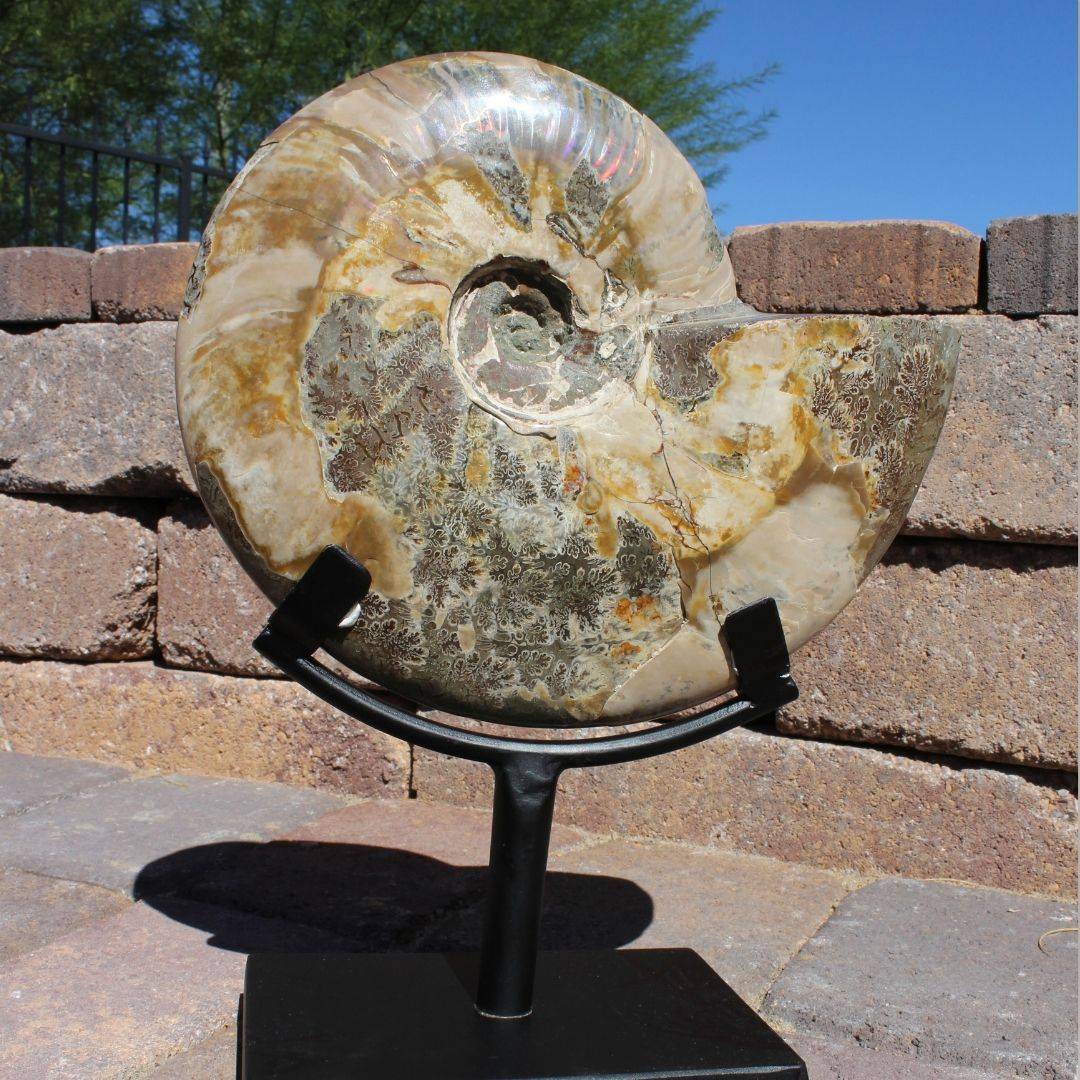
Madagascar ammonite fossil with red iridescent shell preserved in polished areas and intricate exposed suture patterns across the remaining surface; approx. 2165g / 9 × 6 × 2 in. Includes a black powder-coated steel display stand for a total display height of 13 in.
 Chakra | Third Eye and Root
 Primary Intention | Wisdom
 Country of Origin | Madagascar


Couldn't load pickup availability
Estimated Delivery: …
What's included in your order?
 30-Days Returns
 Ethically Curated
 Authentic Minerals



Polished Ammonite Fossil — Iridescent & Sutures, Madagascar
Polished Ammonite Fossil (2165g) — Iridescent Shell & Sutures, Madagascar
Intuition • Ancient Wisdom• Support
This substantial ammonite fossil from Madagascar preserves two distinct aspects of an ancient marine organism: areas of iridescent shell with red pearlescent flashes and an extensive network of intricately exposed suture patterns. Measuring approximately 9 × 6 × 2 inches and weighing 2165g, the fossil combines preserved shell material with the complex internal architecture of the ammonite.
The polished shell sections reveal flashes of red iridescence that shift with the angle of the light. Across the remaining surface, finely detailed, branching sutures form elaborate patterns in cream, caramel, and brown, tracing the boundaries where the internal chamber walls once met the outer shell. The contrast between the reflective shell and exposed sutures creates two different ways to appreciate the fossil's preservation.
Presented on a solid black powder-coated steel stand, the ammonite reaches an overall display height of approximately 13 inches. The stand provides an elevated presentation that allows the fossil's spiral form, natural coloration, and detailed surface to remain the focus.
Specimen Details
- Material: Fossil ammonite with preserved iridescent shell
- Locality: Madagascar
- Formation: Fossilized chambered shell of an extinct marine cephalopod
- Features: Red pearlescent flashes, exposed branching suture patterns, spiral shell structure, and visible natural fractures
- Color: Cream, tan, caramel, brown, and red iridescent flashes
- Finish: Selectively polished shell areas with exposed suture detail across the remaining surface
- Size: Approx. 9 × 6 × 2 in.
- Specimen Size: Cabinet specimen
- Weight: 2165g / approx. 4.77 lb
- Display Stand: Solid steel with black powder-coated finish
- Stand Dimensions: Approx. 6 × 5 × 4 in.
- Stand Weight: 295g
- Total Weight: 2460g / approx. 5.42 lb
- Overall Display Height: Approx. 13 in.
- Chakra Association: Root and Third Eye
- Intention: Intuition and Ancient Wisdom
- Selection: One-of-a-kind; exact specimen shown
Geological Notes
Ammonites were marine cephalopods related to modern nautiluses, squid, and octopuses. They inhabited Earth's oceans for hundreds of millions of years before becoming extinct at the end of the Cretaceous Period, approximately 66 million years ago. Their coiled shells were divided into chambers separated by internal walls called septa, which helped regulate buoyancy during life.
As ammonite shells became buried in marine sediments, mineralization and fossilization preserved portions of their original structure. The elaborate patterns visible across this specimen are sutures, marking the intersections of the septa with the outer shell. Their branching complexity makes ammonite sutures particularly useful to paleontologists studying and classifying different ammonite groups.
In some ammonite fossils, portions of the original shell's nacreous structure survive and produce iridescent colors through the interaction of light with thin layers of shell material. This specimen displays red pearlescent flashes within its polished shell areas, while the surrounding exposed sutures reveal the chambered architecture beneath. Together, these features illustrate both the external shell and internal construction of an ancient marine animal.
Mystic Parcel Notes
This ammonite was selected for the contrast between its preserved iridescent shell and exceptionally detailed suture patterns. The polished areas reveal changing flashes of red, while the exposed internal structure invites closer examination of the complex patterns formed within the shell. Its substantial scale and elevated steel stand make it a natural focal point in a fossil or Curio Cabinet collection.
Symbolically, ammonites are often associated with ancient wisdom, the passage of time, and the continuity of natural cycles. For intention buyers, the Root Chakra association reflects a connection to Earth's history, while the Third Eye Chakra association represents intuition and inward understanding. These associations offer a reflective interpretation of a fossil whose physical structure records a much older chapter of life on Earth.
For collectors, the primary appeal lies in the specimen's size, exposed suture detail, preserved iridescence, and contrasting surface finishes. For those drawn to intentional living, it may serve as a reminder that understanding develops through time, observation, and an appreciation of what lies beneath the surface.
What you’ll receive
- One (1) polished and exposed-suture ammonite fossil from Madagascar — exact specimen shown, 2165g / 9 × 6 × 2 in.
- One (1) solid black powder-coated steel display stand — 295g / 6 × 5 × 4 in.
- Mystic Parcel specimen identification card
How to use
- Display on the included steel stand in a Curio Cabinet, fossil collection, office, or natural history display.
- Position where indirect lighting can reveal the red iridescence and intricate suture patterns.
- Use as a study specimen to explore ammonite shell anatomy, fossil preservation, and septal sutures.
- Incorporate into a reflective space as a symbol of ancient wisdom, intuition, and the passage of time.
Care
- Handle with particular care. The preserved shell material is fragile, and some areas show flaking or lifting of the surface layer.
- A visible fracture crosses the specimen. Whether this fracture was stabilized during preparation is undetermined; avoid lifting or supporting the fossil by an unsupported section.
- Keep the fossil securely supported on its stand, away from edges, vibration, and high-traffic areas.
- Avoid water, cleaning solutions, abrasive cloths, brushes, and rubbing the iridescent shell surface.
- For routine care, minimize direct contact with the fossil and remove dust only where it can be done without disturbing loose shell material.
- Keep away from prolonged direct sunlight, excessive humidity, and sudden temperature changes.
Notes: This is an authentic fossil specimen with natural structural variation, visible fractures, and delicate preserved shell material. Some iridescent shell areas are actively fragile and may shed small flakes during handling or transport. A visible fracture is present, but its repair or stabilization history has not been established. The specimen is offered as a collector display fossil and should be handled accordingly. Photos show the exact specimen you will receive. Chakra and intention associations are symbolic traditions, not scientifically established properties.
| Specification | Details |
|---|---|
| Specimen | One-of-a-kind polished ammonite fossil from Madagascar; exact specimen shown |
| Fossil size | Approximately 9 × 6 × 2 in. |
| Fossil weight | 2165 g (approximately 4.77 lb) |
| Display stand dimensions | Approximately 6 × 5 × 4 in. |
| Display stand weight | 295 g |
| Total weight | 2460 g (approximately 5.42 lb) |
| Overall display height | Approximately 13 in. |
| Color | Cream, tan, caramel, and brown with red iridescent flashes |
| Finish and features | Selectively polished shell areas, exposed branching suture patterns, spiral shell structure, and visible natural fractures |
| Geological origin | Fossilized chambered shell of an extinct marine cephalopod; Madagascar |
| Included | Ammonite fossil, black powder-coated steel display stand, and specimen identification card |
| Component | Material and construction |
|---|---|
| Fossil specimen | Authentic fossilized ammonite shell with preserved iridescent shell material and exposed internal suture detail. Selectively polished areas reveal red pearlescent flashes, contrasted with the natural cream, tan, caramel, and brown patterns. |
| Natural condition | The fossil has delicate preserved shell material, natural structural variation, areas of flaking or lifting, and a visible fracture. The fracture's repair or stabilization history is undetermined; handle gently and keep the specimen securely supported. |
| Display stand | Solid steel with a black powder-coated finish, designed to elevate and support the fossil for display. |
This Ammonite Fossil Madagascar specimen pairs fragile, naturally preserved fossil material with a durable steel display stand. Avoid rubbing or cleaning the iridescent shell surface.
Ammonites were marine cephalopods related to modern nautiluses, squid, and octopuses. They inhabited Earth's oceans for hundreds of millions of years before becoming extinct at the end of the Cretaceous Period, approximately 66 million years ago. Their coiled shells were divided into chambers separated by internal walls called septa, which helped regulate buoyancy during life.
As ammonite shells became buried in marine sediments, mineralization and fossilization preserved portions of their original structure. The elaborate patterns visible across this specimen are sutures, marking the intersections of the septa with the outer shell. Their branching complexity makes ammonite sutures particularly useful to paleontologists studying and classifying different ammonite groups.
In some ammonite fossils, portions of the original shell's nacreous structure survive and produce iridescent colors through the interaction of light with thin layers of shell material. This specimen displays red pearlescent flashes within its polished shell areas, while the surrounding exposed sutures reveal the chambered architecture beneath. Together, these features illustrate both the external shell and internal construction of an ancient marine animal.
This ammonite was selected for the contrast between its preserved iridescent shell and exceptionally detailed suture patterns. The polished areas reveal changing flashes of red, while the exposed internal structure invites closer examination of the complex patterns formed within the shell. Its substantial scale and elevated steel stand make it a natural focal point in a fossil or Curio Cabinet collection.
Symbolically, ammonites are often associated with ancient wisdom, the passage of time, and the continuity of natural cycles. For intention buyers, the Root Chakra association reflects a connection to Earth's history, while the Third Eye Chakra association represents intuition and inward understanding. These associations offer a reflective interpretation of a fossil whose physical structure records a much older chapter of life on Earth.
For collectors, the primary appeal lies in the specimen's size, exposed suture detail, preserved iridescence, and contrasting surface finishes. For those drawn to intentional living, it may serve as a reminder that understanding develops through time, observation, and an appreciation of what lies beneath the surface.


