
Benz Calcite (424g) — Banded Crystal Cluster, China
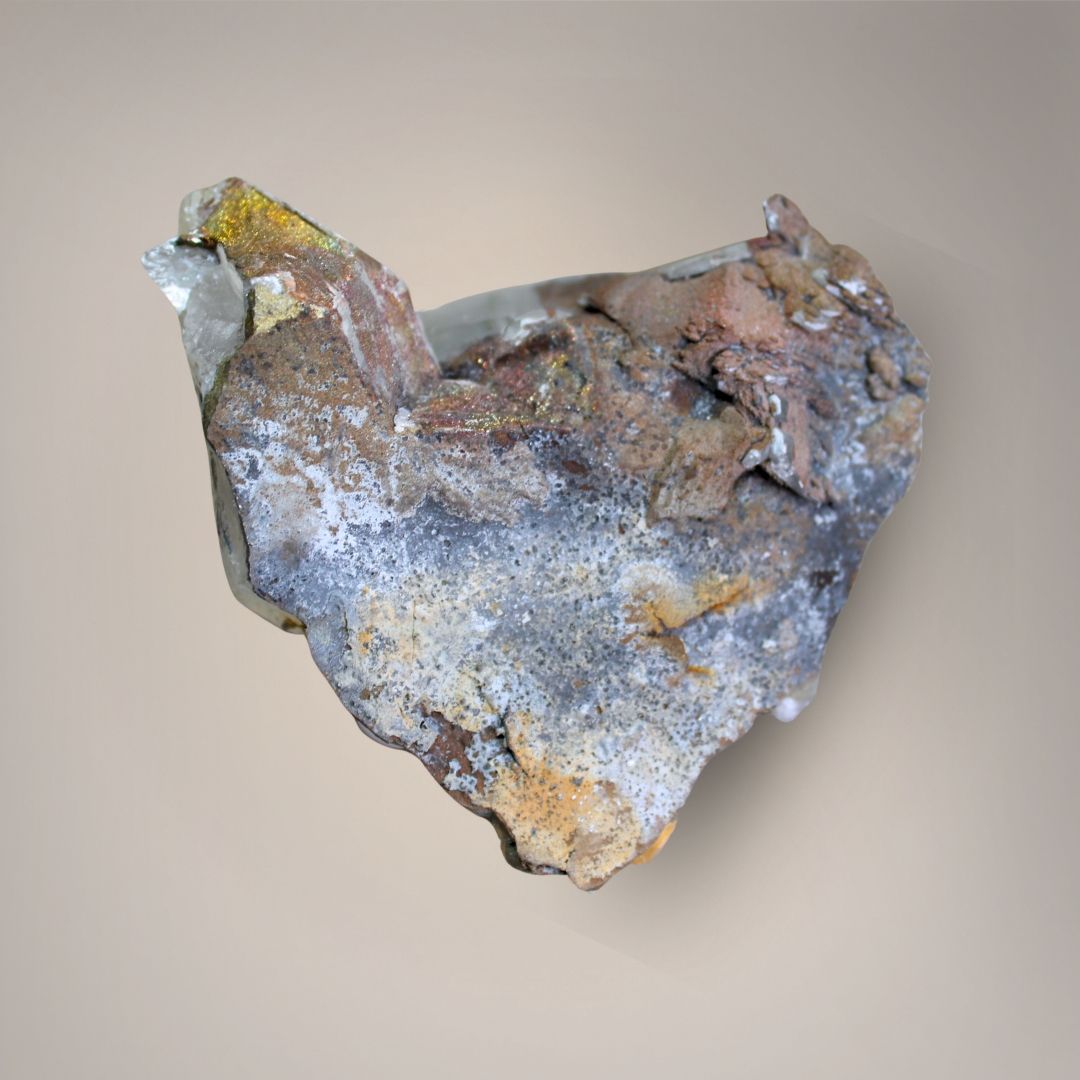
Chinese Benz (Mercedes) Calcite with translucent intergrown crystals, distinct dark mineral bands, reflective faces, and red longwave UV fluorescence; approx. 424g / 4 × 4 × 2.5 in.
 Primary Intention | Clarity
 Country of Origin | China

Couldn't load pickup availability
Estimated Delivery: …
What's included in your order?
 30-Days Returns
 Ethically Curated
 Authentic Minerals



Benz Calcite (424g) — Banded Crystal Cluster, China
Benz Calcite (424g) — Banded Crystal Cluster, China
Clarity • Connection • Confidence
This Benz Calcite, also known as Mercedes Calcite, from Xianghualing in China's Hunan Province features a cluster of intergrown translucent crystals distinguished by sharply defined bands of Chalcopyrite. These dark mineral inclusions follow the crystal growth structure, creating the angular markings associated with the Benz or Mercedes trade name. The specimen weighs 424g and measures approximately 4 × 4 × 2.5 inches.
Broad, reflective crystal faces reveal fine parallel striations, internal growth lines, and areas of milky-white Calcite. The arrangement includes prominent clear to smoky-translucent crystals rising above a compact base of smaller white crystals. Rust-colored staining and patches of metallic Chalcopyrite add contrast, while changes in lighting reveal subtle reflections across the crystal surfaces.
Under longwave ultraviolet light, the specimen exhibits vivid red fluorescence, creating a marked contrast with its pale appearance in ordinary lighting. Its combination of crystal geometry, oriented Chalcopyrite banding, reflective surfaces, and fluorescence makes it particularly suitable for close examination and mineral display.
Specimen Details
- Material: Calcite (CaCO₃) with Chalcopyrite (CuFeS₂)
- Trade Name: Benz Calcite / Mercedes Calcite
- Locality: Xianghualing Sn-polymetallic Ore Field, Linwu County, Chenzhou, Hunan Province, China (dealer-reported)
- Formation: Intergrown Calcite crystal cluster with oriented Chalcopyrite inclusions and secondary white crystal growth
- Features: Angular crystal geometry, parallel surface striations, Chalcopyrite bands, translucent faces, metallic mineral patches, and longwave UV fluorescence
- Color: Clear to translucent gray, milky white, dark gray to black Chalcopyrite bands, and rust-colored accents
- Finish: Natural, unpolished crystal surfaces with reflective faces and visible growth textures
- Size: Approx. 4 × 4 × 2.5 in.
- Specimen Size: Small Cabinet
- Weight: 424g
- Fluorescence: Red under longwave ultraviolet light
- Chakras: Root, Sacral, Solar Plexus, Heart, Throat, Third Eye, and Crown
- Intentions: Clarity, Connection, Confidence
- Selection: One-of-a-kind; exact specimen shown
Geological Notes
Calcite is a calcium carbonate mineral that crystallizes in the trigonal crystal system and occurs in a wide range of hydrothermal and sedimentary environments. The Xianghualing ore field in Hunan Province is known for its polymetallic mineralization, including tin-bearing deposits and associated hydrothermal minerals. Calcite specimens with oriented metallic inclusions have been documented from this mining district.
The distinctive "Benz" or "Mercedes" appearance develops when Chalcopyrite becomes concentrated along specific crystal growth features, producing dark lines and angular patterns that can resemble the three-pointed Mercedes-Benz emblem. Chalcopyrite is a copper iron sulfide mineral with a metallic luster and typically brass-yellow coloration, although fine inclusions can appear much darker when viewed through translucent Calcite. The name Benz Calcite describes this distinctive visual characteristic rather than a separate mineral species.
This specimen preserves several stages or expressions of Calcite growth, including larger translucent crystals and smaller milky-white crystal development. Fine surface striations and internal Chalcopyrite banding become increasingly visible under angled illumination, while the red fluorescence reveals another optical characteristic of the mineral. Calcite fluorescence can result from trace-element activators and defects within the crystal structure; the specific activator in this specimen has not been determined.
Mystic Parcel Notes
This specimen was selected for its layered visual character: sharply contrasting Chalcopyrite bands within pale Calcite, reflective crystal faces, and the transition between transparent and opaque growth. The prominent crystal faces create a structured display, while the irregular arrangement of smaller crystals preserves the natural complexity of the formation. Its longwave UV response adds another dimension to the specimen's presentation.
For intention buyers, Calcite is traditionally associated with clarity and the ability to approach experiences with greater awareness. The intersecting crystal growth and distinct internal lines offer a visual reference for Connection, while the strong geometric structure may serve as a symbol of Confidence. These associations are interpretive and can be incorporated into personal reflection or meditation.
For collectors, this piece brings together an identifiable Chinese mineral locality, an established trade-name crystal habit, oriented Chalcopyrite inclusions, and notable optical properties. Its approximately four-inch dimensions make it suitable for a cabinet display, while its contrasting surfaces invite examination under different lighting conditions.
What You’ll Receive
- One (1) Benz Calcite with Chalcopyrite crystal cluster from Xianghualing, Hunan Province, China — exact specimen photographed
- One (1) Mystic Parcel specimen identification card
How to Use
- Display in a mineral cabinet or Curio Cabinet where directional lighting can reveal the crystal striations and Chalcopyrite bands.
- Examine under longwave ultraviolet light to observe its red fluorescence, using appropriate UV eye protection.
- Include in a Calcite or Chinese mineral locality collection for comparative study of crystal habits and mineral inclusions.
- Use as a visual focal point during meditation, journaling, or reflection on Clarity, Connection, and Confidence.
Care
- Handle carefully. Calcite has a Mohs hardness of 3 and can scratch or chip relatively easily.
- Avoid impacts and pressure on exposed crystal edges.
- Remove loose dust with a soft, dry brush or microfiber cloth.
- Avoid acids, vinegar, abrasive cleaners, salt treatments, and prolonged water exposure.
- Store or display on a stable, supportive surface away from direct contact with harder mineral specimens.
- Use appropriate eye protection when examining fluorescence under ultraviolet light.
Notes: This is a natural mineral specimen with visible crystal growth variations, Chalcopyrite inclusions, iron-colored staining, matrix remnants, and possible natural contact or cleavage surfaces. The exact specimen photographed is the one you will receive. Xianghualing is the dealer-reported locality; the specific mine has not been independently verified. Crystal intentions and chakra associations are symbolic practices, not scientifically established effects.
| Specification | Details |
|---|---|
| Product | Benz Calcite banded crystal cluster, also known as Mercedes Calcite |
| Weight | 424 g |
| Size | Approximately 4 × 4 × 2.5 in. |
| Specimen size category | Small Cabinet |
| Locality | Xianghualing Sn-polymetallic Ore Field, Linwu County, Chenzhou, Hunan Province, China (dealer-reported) |
| Formation | Intergrown crystal cluster with oriented Chalcopyrite inclusions and secondary white crystal growth |
| Color | Clear to translucent gray and milky white, with dark gray to black bands and rust-colored accents |
| Fluorescence | Red under longwave ultraviolet light |
| Surface and finish | Natural, unpolished crystal faces with reflective surfaces, visible growth textures, and parallel striations |
| Selection | One of a kind; exact Benz Calcite specimen shown |
| Material | Details |
|---|---|
| Calcite (CaCO₃) | Natural translucent to milky-white crystals form the intergrown cluster, with reflective faces, internal growth lines, and fine surface striations. |
| Chalcopyrite (CuFeS₂) | Oriented mineral inclusions create the distinctive dark bands and angular markings associated with Benz Calcite. Metallic patches add contrast across the crystal cluster. |
| Natural surface features | Unpolished crystal surfaces retain their natural growth textures, rust-colored staining, and visible variations between clear, smoky-translucent, and opaque areas. |
Calcite is a calcium carbonate mineral that crystallizes in the trigonal crystal system and occurs in a wide range of hydrothermal and sedimentary environments. The Xianghualing ore field in Hunan Province is known for its polymetallic mineralization, including tin-bearing deposits and associated hydrothermal minerals. Calcite specimens with oriented dark inclusions have been documented from this mining district.
The distinctive Benz or Mercedes appearance develops when dark mineral material becomes concentrated along particular crystal growth features, producing lines or angular patterns that can resemble the three-pointed Mercedes-Benz emblem. These markings are commonly associated with sulfide minerals such as pyrite, although the precise composition of the dark bands in this specimen has not been analytically confirmed. The name Benz Calcite describes this visual characteristic rather than a separate mineral species.
This specimen preserves several stages or expressions of calcite growth, including larger translucent crystals and smaller milky-white crystal development. Fine surface striations and internal banding become increasingly visible under angled illumination, while the red fluorescence reveals another optical characteristic of the mineral. Calcite fluorescence can result from trace-element activators and defects within the crystal structure; the specific activator in this specimen has not been determined.
This specimen was selected for its layered visual character: sharply contrasting dark lines within pale calcite, reflective crystal faces, and the transition between transparent and opaque growth. The prominent crystal faces create a structured display, while the irregular arrangement of smaller crystals preserves the natural complexity of the formation. Its longwave UV response adds another dimension to the specimen's presentation.
For intention buyers, Calcite is traditionally associated with clarity and the ability to approach experiences with greater awareness. The intersecting crystal growth and distinct internal lines offer a visual reference for Connection, while the strong geometric structure may serve as a symbol of Confidence. These associations are interpretive and can be incorporated into personal reflection or meditation.
For collectors, this piece brings together an identifiable Chinese mineral locality, an established trade-name crystal habit, and notable optical properties. Its approximately four-inch dimensions make it suitable for a cabinet display, while its contrasting surfaces invite examination under different lighting conditions.


